A Registered Psychotherapist working with South Asian adults and couples across Ontario.
I work with people carrying things that are hard to name: childhood wounds, family patterns, cultural weight, the kind of anxiety that hums underneath everything. My job isn't to fix it. It's to be in the room with you while we figure out what it is, where it started, and what it needs.
Book a free 20-min consult →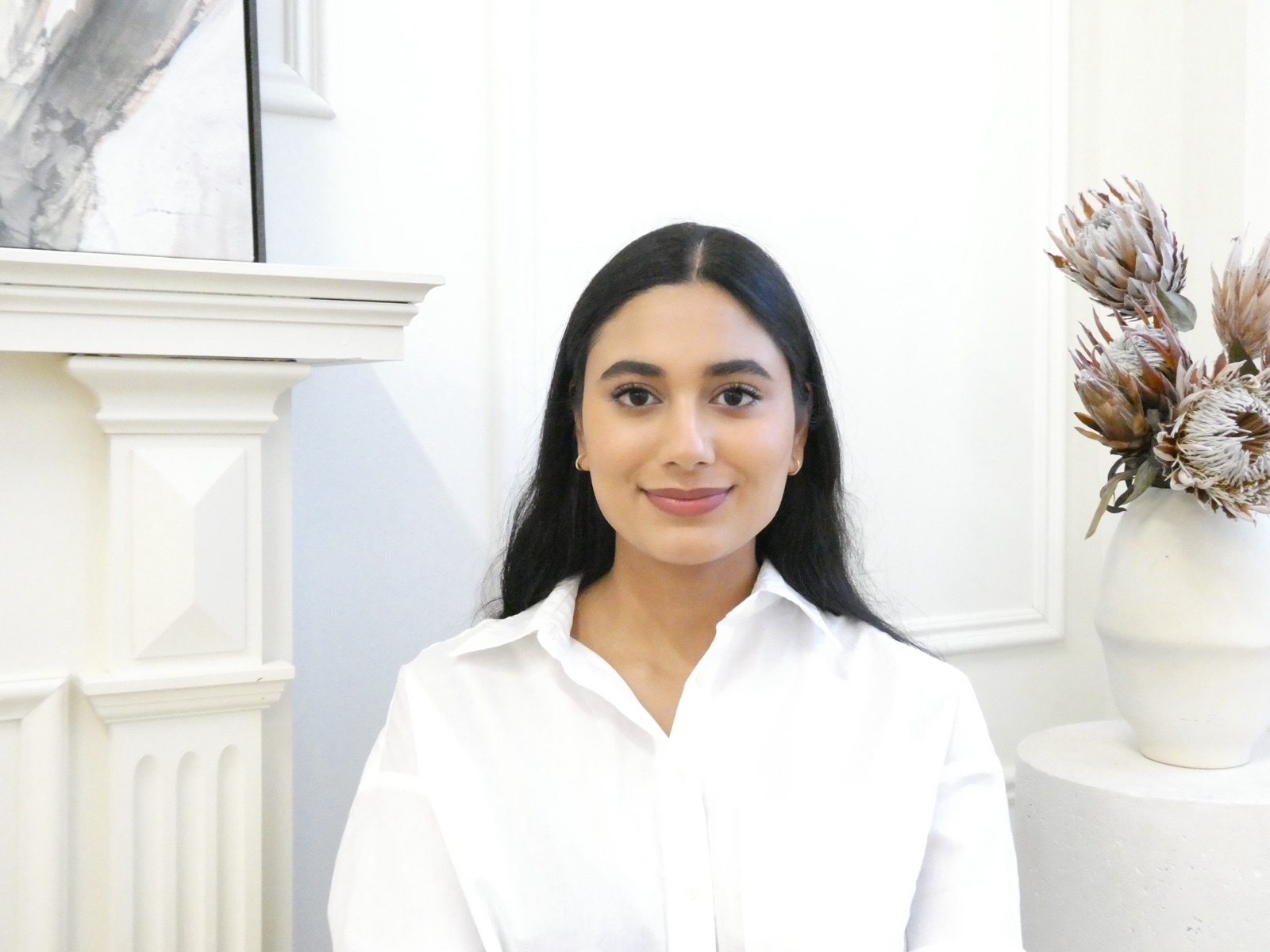
"It's okay to cry with a client. You're showing them you're walking this journey with them."How I work
For a long time, the South Asian community has carried mental health the way it carries everything else: quietly, privately, and often alone. Therapy, when it was an option, often meant explaining your family, your culture, your language, before the actual work could begin. Half the session translating, half the session being misunderstood.
A lot of my clients come to me having tried therapy before. What they say, again and again, is that it almost helped. Except the therapist didn't get the joint family. Or thought "just move out" was a workable answer. Or treated the cultural part as a footnote.
I started Rahao to be the room where you don't have to translate. Where the cultural context is the foundation, not the footnote. Where the language you use to describe your feelings (Punjabi, Hindi, English, or somewhere between) gets to come out the way it actually comes out.
In Gurbani, Rahao marks the line in a verse meant to be returned to: the centerpiece, the place where reflection is invited. The practice carries the same intention. A space to slow down, return to yourself, and notice what's underneath.
I'm an attachment therapist. That means the lens I look through, more often than not, is the lens of your earliest relationships: what you learned about safety, closeness, conflict, and your worth long before you had words for any of it.
A lot of therapy stays at the level of skills: CBT, coping strategies, ways to manage the surface. Those skills are useful, and we use them. But we don't stop there. The work I do goes underneath, to the root.
It's slower work. It can feel uncertain. There's no graph showing progress. And in my experience, it's the work that actually changes things.

No timeline, no right speed. We move at whatever rhythm you can hold.
Not what happened to you, but what happened inside you as a result.
You never have to translate your family, your faith, or your language here.
You don't stop because you got better. You keep showing up because it helps.
Lighter, more grounded, more able to feel. That is the work working.
Warm and direct. The therapist behind the desk does not exist here.
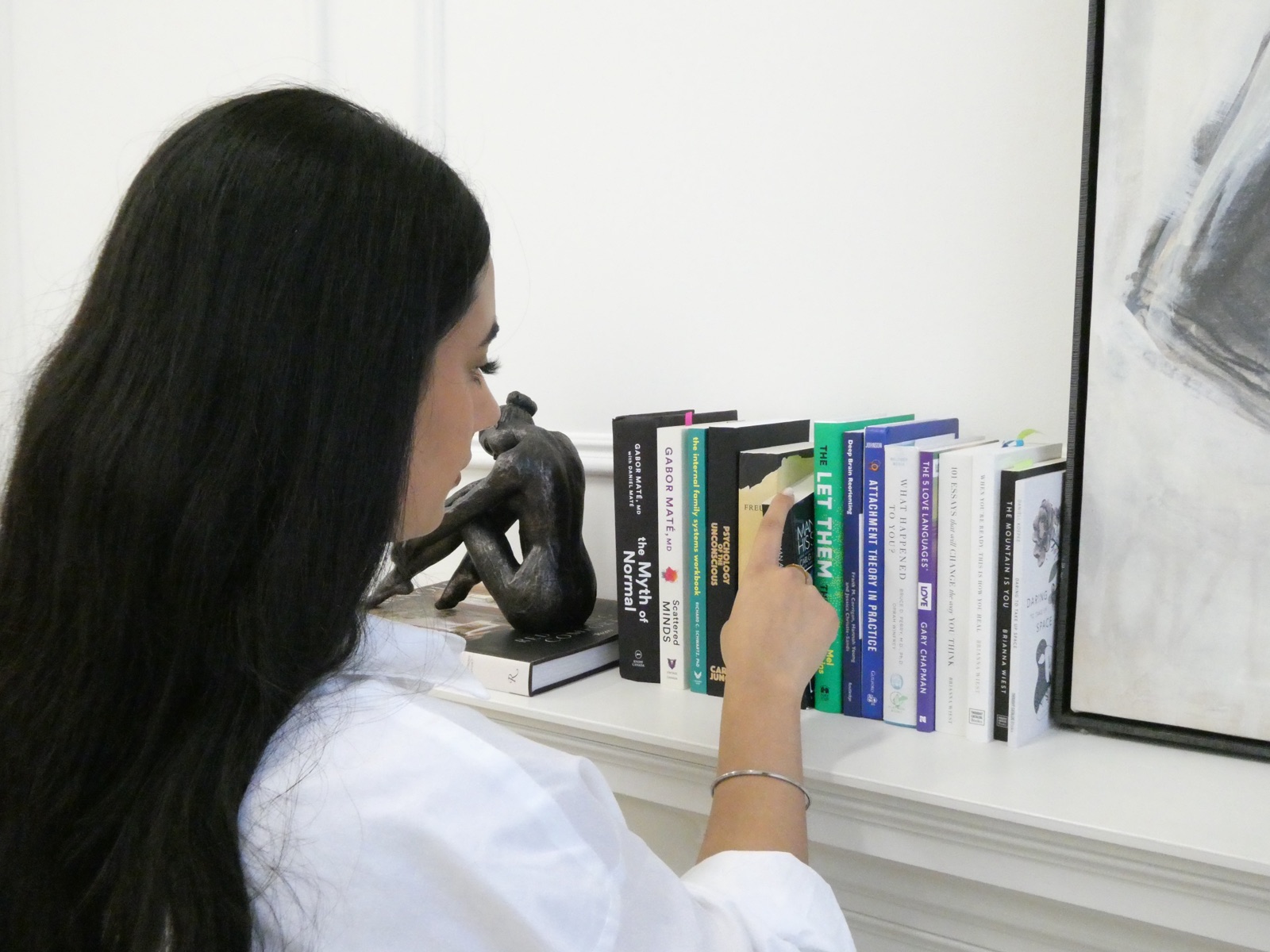
My approach pulls from Emotionally Focused Therapy, Internal Family Systems, psychodynamic work, Deep Brain Reorienting, CBT, DBT, mindfulness-based and acceptance & commitment frameworks, and spiritually integrated therapy when clients want it.
I read constantly. Bessel van der Kolk on the body. Gabor Maté on trauma and connection. Richard Schwartz on parts work. Peter Levine on the nervous system. The lineage I draw from is broad, but the through-line is always the same: get to the root, honour the whole person, never treat them like a symptom.
I work in English, Hindi, and Punjabi. Clients often switch mid-session: translating a parent's exact words, naming an emotion that only exists in one language, or just letting it come out the way it wants to. That's welcome here.
Credentials matter. They just aren't the first thing about me.
I also work in Ontario's WSIB system and have experience supporting first responders, workplace-injury clients, and people moving from short-term to long-term care.
A free 20-minute consultation. No pressure, no script. Just a real conversation.
Book a free 20-min consult →